



Machine: MG
MG
Multi-purpose cutting machine allowing to integrate wide palette of additional accessories.
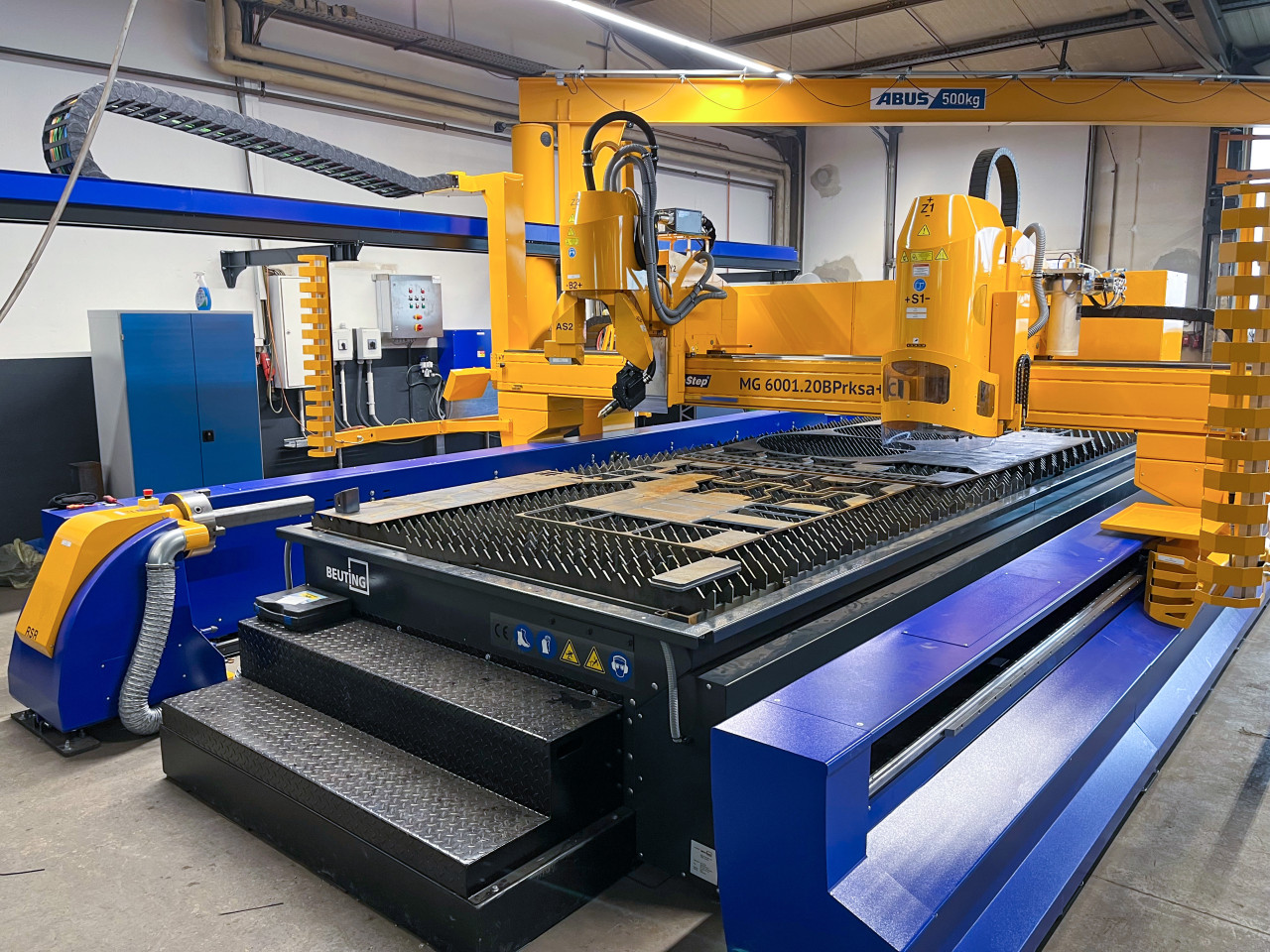
Founded in 1995 by Günter Frick as a one-man business, Frick Maschinenbau today serves more than 200 customers with a broad portfolio ranging from cutting and welding work to vessel and apparatus construction. As requirements continued to increase, the existing cutting systems increasingly reached their limits, making modernization unavoidable. The investment in a multifunctional 3D plasma cutting system of the MG series represents a major technological leap for Frick Maschinenbau and opens up entirely new possibilities.
In the early days, Günter Frick welded stairs, railings, candle holders, and much more in his garage. Before long, however, his focus increasingly shifted toward mechanical engineering. As the customer base grew, so did the demands, and in 1999 Frick relocated to the company’s current site in Steißlingen, in the district of Konstanz. The machine park was gradually expanded to meet the diverse requirements of what are now more than 200 customers, ranging from small metalworking shops to large industrial companies.
Today, Frick Maschinenbau stands for a wide range of services: from oxyfuel and plasma cutting, robotic welding, bending and deburring, to vessel and apparatus construction. In addition, precisely manufactured welded assemblies are produced on site and later assembled into complex structures all from a single source, all with the highest quality standards.
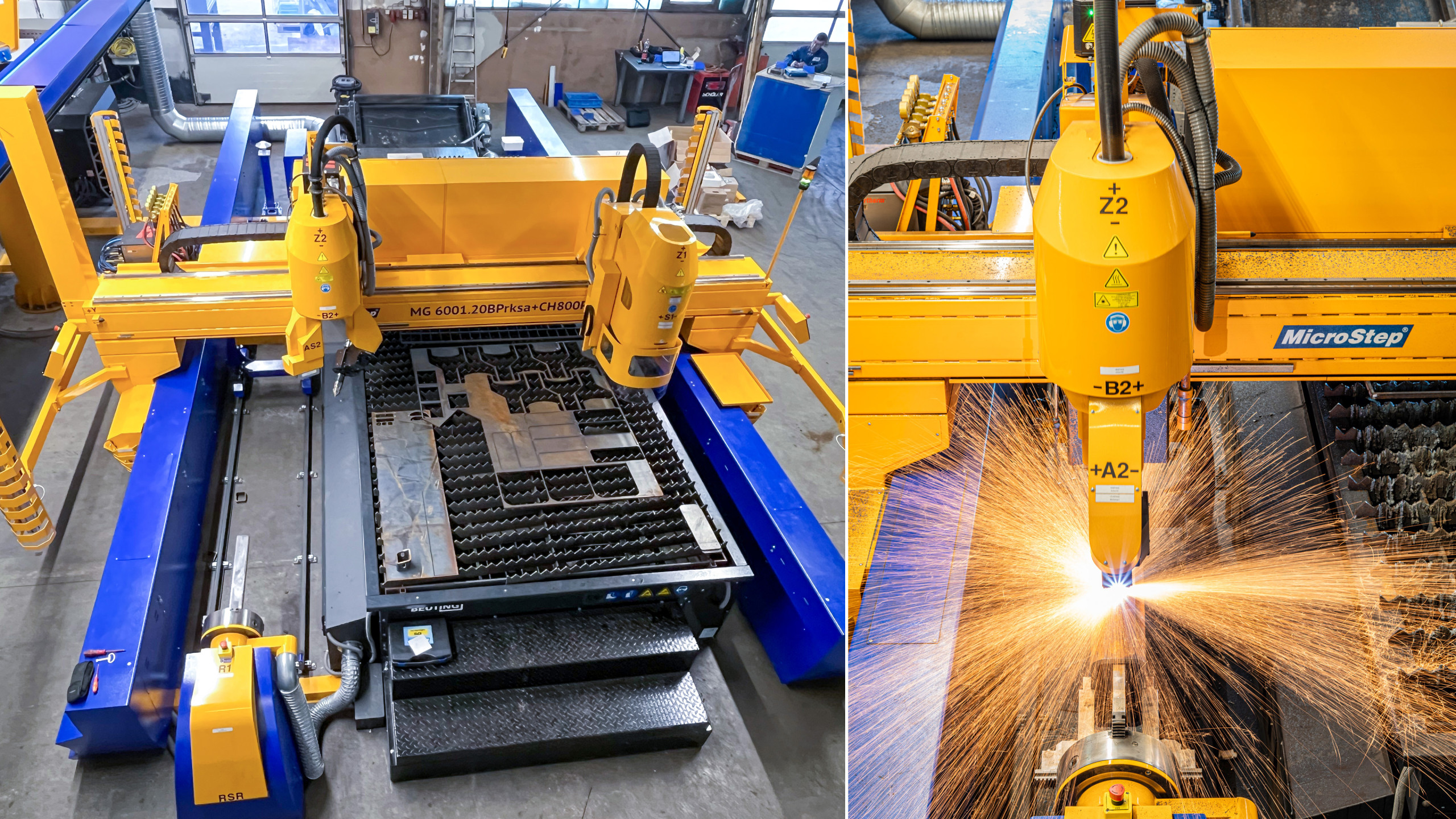
Since February 2024, a high-performance plasma cutting system has been in daily operation, handling complex tasks with ease.
Existing cutting systems reach their limits
The Frick Maschinenbau team, currently consisting of nine employees, processes more than 600 tons of steel per year. The production process is clearly structured: from the material warehouse, the sheets are transported to the cutting system and usually directly onward to the deburring system. Some components are then welded and prepared for shipment to customers.
Until now, Frick Maschinenbau relied on a plasma cutting system and an oxyfuel cutting system for material cutting. However, as requirements increased, these systems reached their limits more and more frequently.
“Time and again, we had to turn down inquiries because the length of our cutting table was insufficient or certain hole sizes could not be produced with the existing technology,” explains Stefan Kroll, welding technician and responsible for work preparation at Frick Maschinenbau.
The logical consequence was clear: a new solution was needed. The company was looking for a powerful plasma cutting system with a six-meter processing length, equipped with a rotator and drilling support, in order to reliably handle more complex requirements in the future.
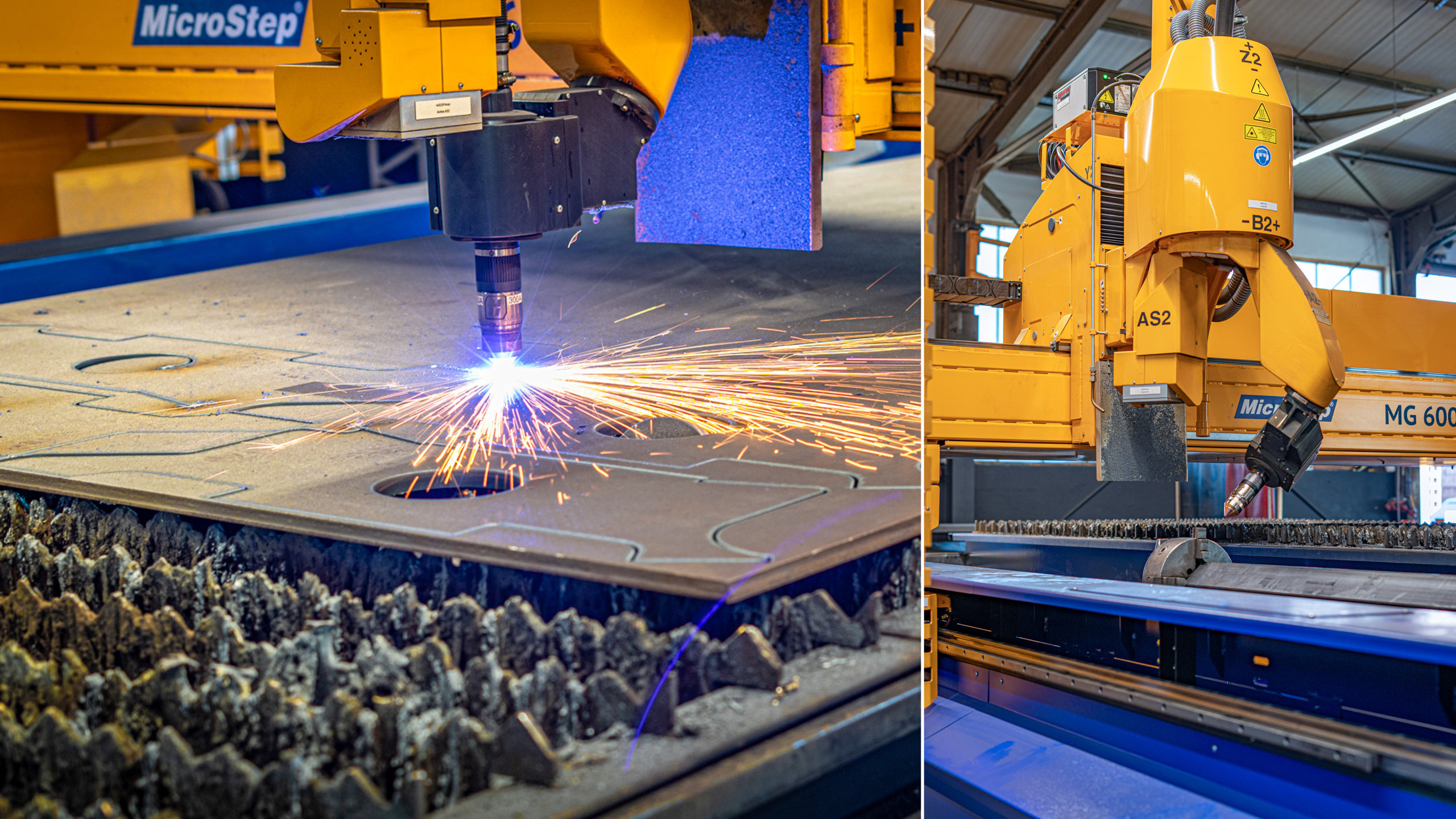
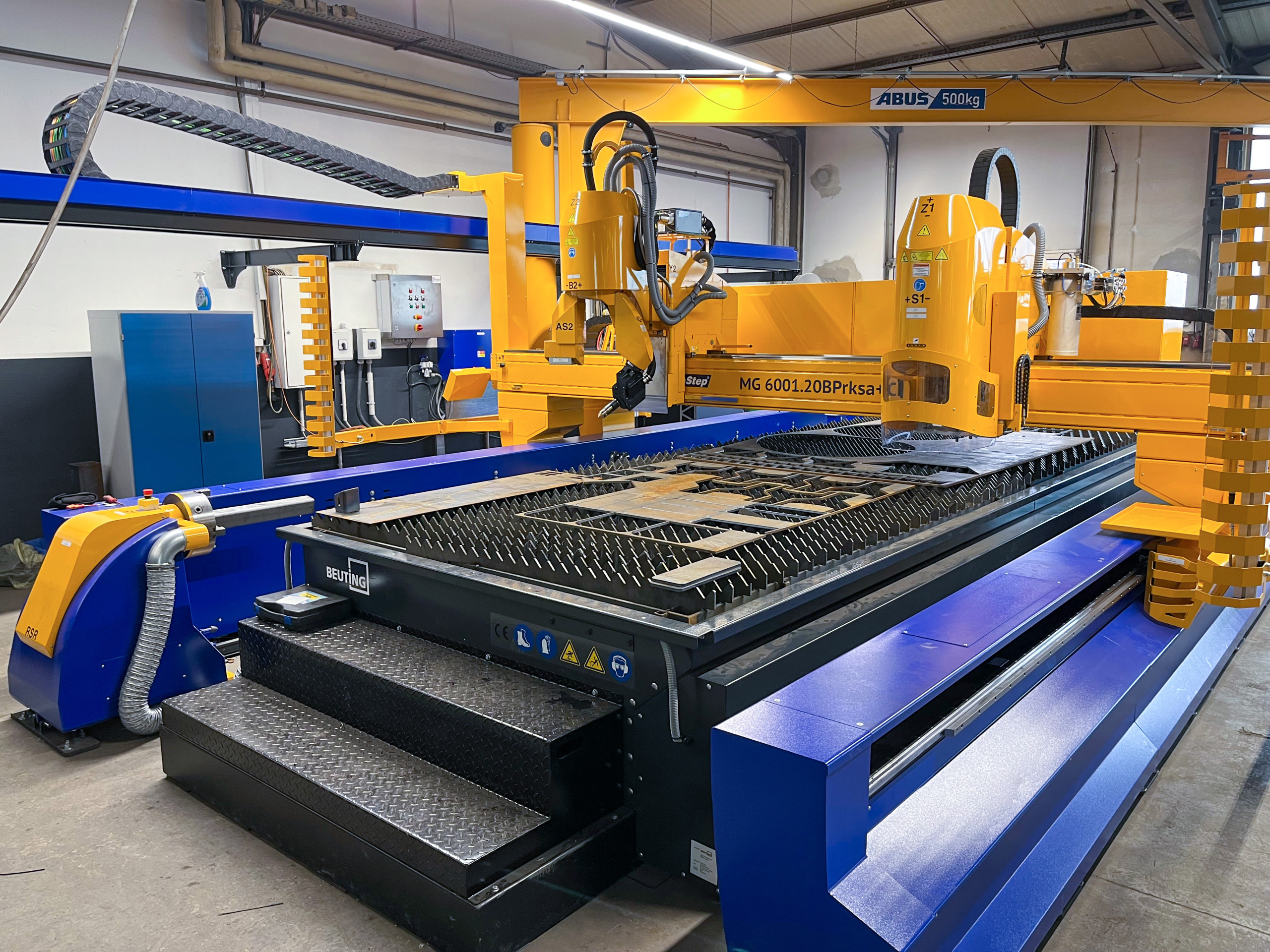
The portal cutting system is equipped with a plasma rotator enabling 3D bevel cutting, for example for weld seam preparation up to 50°. A Hypertherm XPR300 is used as the plasma source.
Enormous technology leap with the new system
Frick Maschinenbau first became aware of MicroStep in 2015 at a trade fair. After comparing various suppliers and going through an intensive decision-making process, the decision was finally made in 2023: the new plasma cutting system would come from MicroStep equipped with a plasma rotator, pipe cutting device and a fully automatic drilling spindle.
Since February 2024, the system has been in daily operation, processing batch sizes from 1 to 500 pieces and material thicknesses from 15 to 150 millimeters.
“We are currently working on a larger order involving pipe processing, we’re still getting familiar with it. It’s an enormous technological leap from 2D plasma cutting to what we can now implement with the new system,” reports Stefan Kroll.
Not only the machine’s performance has been convincing, but also the service and support provided by MicroStep Europa. The PROfirst software solution has also proven particularly valuable:
“The software has taken us a big step forward, it’s outstanding. Without it, we would no longer be able to manage the complexity of the processes,” says Kroll.
His conclusion is clear:
“It is an enormous technological leap from 2D plasma cutting to what we can now implement with the new system. We have not regretted the decision for MicroStep and would make the same choice again. There is absolutely no reason not to!”
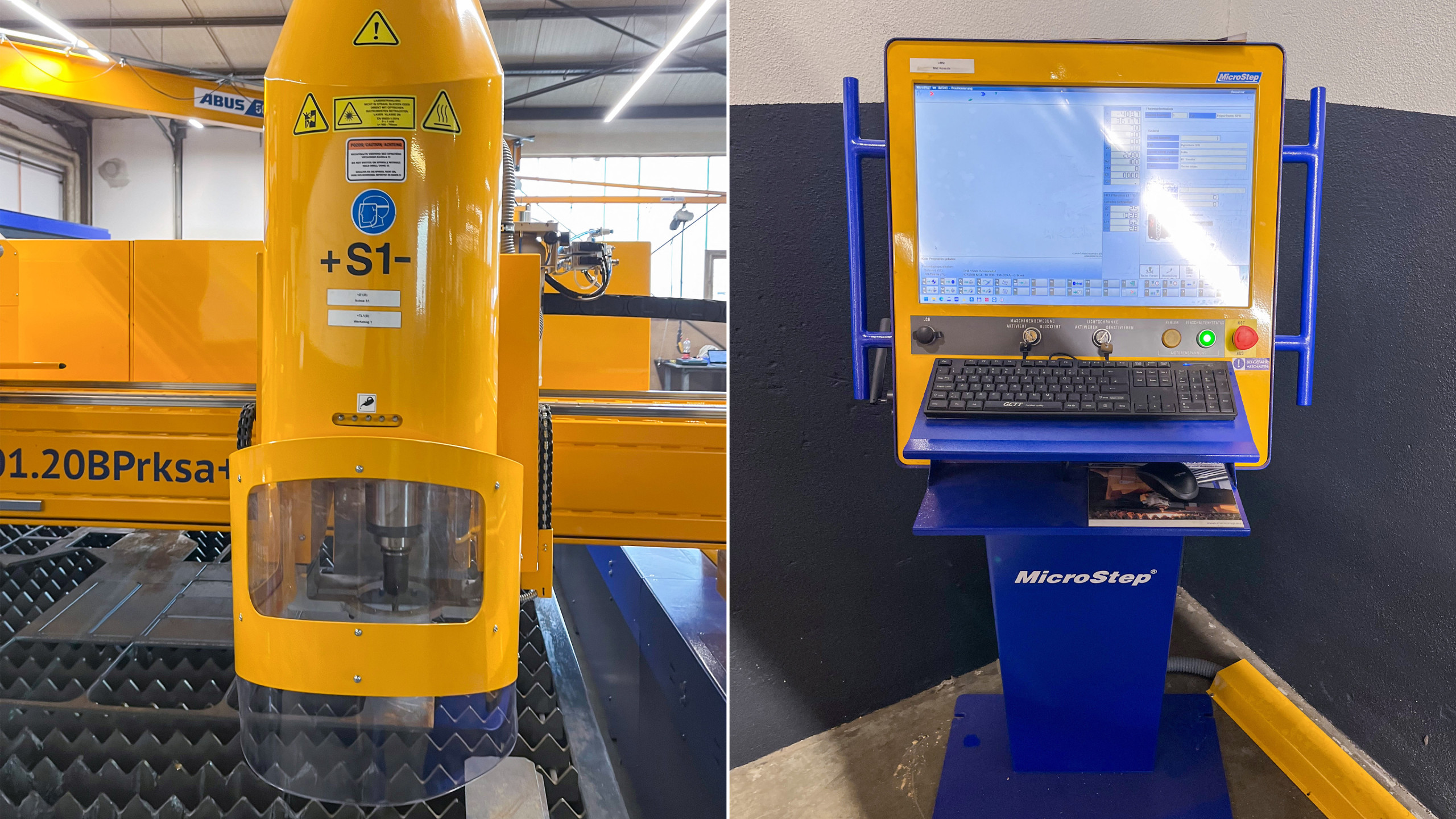
Thanks to a fully automatic drilling unit, Frick can now precisely produce holes up to 36 mm as well as threads up to M30. The system is controlled via a freestanding MMI console with a 24-inch touchscreen monitor.
HIGHLIGHTS OF THE MG PLASMA CUTTING SYSTEM AT A GLANCE:
Flexible plasma cutting system for 3D processing of sheets and pipes
At Frick Maschinenbau, a 3D plasma cutting system of the MG series with a working area of 6,000 × 2,000 mm is in operation. The multifunctional system is designed for continuous industrial use and meets the highest requirements in terms of precision, performance, and ease of operation.
Integrated into the gantry cutting system is a plasma rotator for 3D bevel cutting, for example, for weld seam preparation up to 50°. The patented ACTG® automatic calibration unit ensures consistently high-precision results. A Hypertherm XPR300 is used as the plasma power source.
Pipe cutting device for 3D processing of semi-finished products up to 500 mm in diameter
In addition to sheet metal processing, the plasma cutting system enables flexible pipe processing. Semi-finished products with diameters from 30 to 500 mm and a length of 6,000 mm can be processed. The automatic pipe cutting device rotates the workpieces into the exact position during cutting.
Fully automatic drilling spindle for holes up to 36 mm in diameter and threads up to M30
The multifunctional system also includes a fully automatic drilling spindle. With this powerful technology, Frick Maschinenbau can drill holes, cut threads and countersink sheets. The drilling support enables hole diameters of up to 36 mm and threads up to M30.
An automatic 8-station tool magazine on the gantry bridge ensures efficient and fast tool changes. In addition, ABP technology, in combination with a laser scanner, allows subsequent machining of weld seam preparations on finished sheets or components.
It’s an enormous technological leap from 2D plasma cutting to what we can now implement with the new system,” reports Stefan Kroll.
MicroStep – a producer of CNC cutting machines for plasma, laser, oxyfuel, waterjet cutting and routing. Complex processing of sheets, pipes, profiles and domes. Bevel cutting, milling, drilling, tapping, marking, bending, welding. Automated solutions. CNC control systems and CAM. CAPP applications for complex production management.

© copyright 1991-2026 MicroStep, spol. s r.o. | developed by EXPLORE STUDIOS